
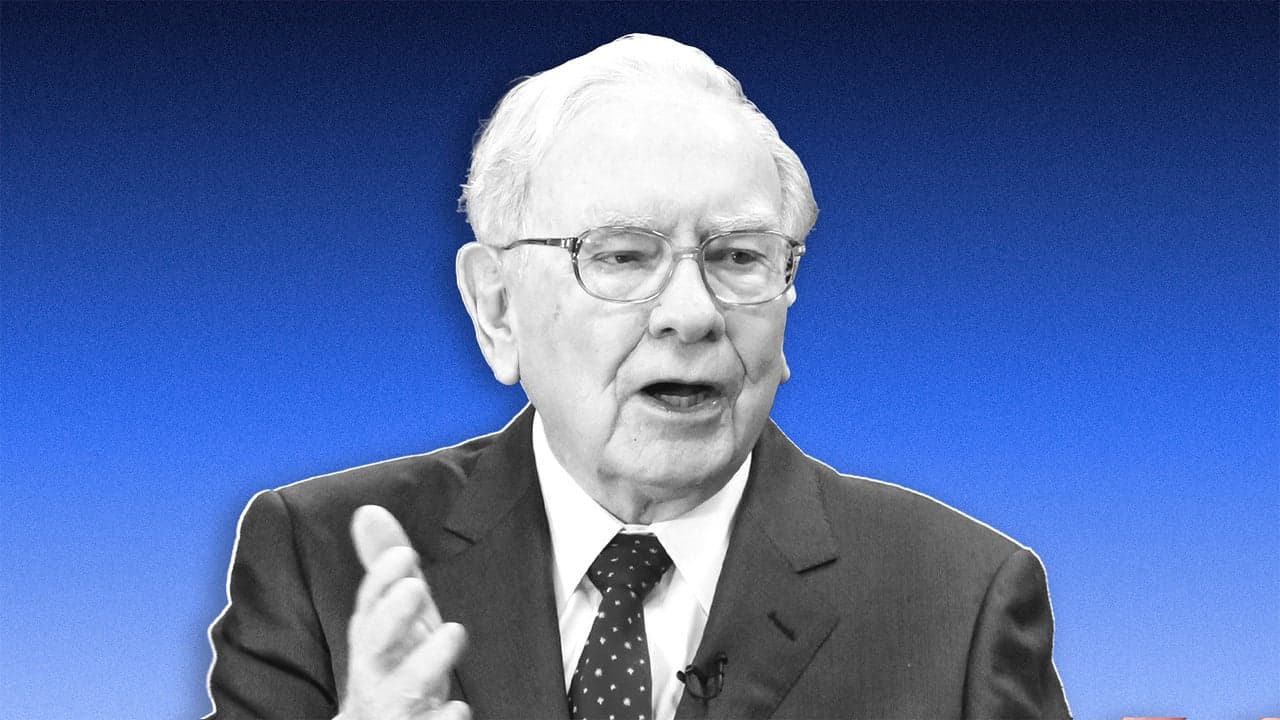
The Success Metric Nobody Talks About at the Office
For decades, the business world has handed us the same scoreboard. Revenue growth, market share, promotions, bonuses, corner offices. We optimize, we hustle, we grind, and we measure progress in numbers that fit neatly inside quarterly reports. But at some point — often quietly, often when the calendar turns another year — a different question sneaks in: Is this actually success?
Warren Buffett, one of the most financially successful human beings to have ever lived, has a strikingly different answer to that question. And it has nothing to do with a stock ticker or a balance sheet. His definition comes down to a single word — one that rarely appears in boardroom presentations or performance reviews.
That word is love.
What Warren Buffett Actually Said
In one of his most memorable reflections on life, Buffett offered this perspective:
"When you get to my age, you'll really measure your success in life by how many of the people you want to have love you actually do love you… that's the ultimate test of how you have lived your life… the more you give love away, the more you get."
Three uses of the word "love" in a single statement from the man who built Berkshire Hathaway into a global empire. You could dismiss it as sentiment from a billionaire who has already won by every conventional measure. But that would be a mistake. Because Buffett isn't speaking from comfort — he's speaking from clarity. The kind of clarity that only arrives after decades of watching what truly lasts and what quietly fades.
And if Buffett is right — and there are few people in history with more data points on what a well-lived life looks like — then a significant portion of today's highest-performing leaders may be failing at the one metric that actually endures.
Why High Performers Often Miss This
The traits that drive professional achievement are real. Ambition, discipline, relentlessness, competitive drive — these qualities produce results. They also, if left unchecked, have a tendency to quietly erode the relationships that matter most.
The leader who is always available for a client call but never present at the dinner table. The executive who listens intently in negotiations but grows impatient in personal conversations. The entrepreneur who inspires an entire team but comes home emotionally empty. These aren't failures of character — they are the predictable consequences of optimizing for the wrong scoreboard for too long.
Buffett's challenge isn't aimed at ambition itself. It's aimed at the awareness that surrounds it. The question isn't whether you've achieved great things. The question is whether, at the end of your life, the people you most want to love you actually will.
Love as a Leadership Practice, Not Just a Personal Value
It might feel awkward to bring the word "love" into a conversation about leadership. Business culture has long treated warmth and emotional investment as soft, secondary qualities — nice to have, but not drivers of performance. That assumption is increasingly falling apart under the weight of evidence.
Research consistently shows that people perform better when they feel genuinely valued. Teams led by managers who demonstrate authentic care have lower turnover, higher engagement, and greater resilience under pressure. Love, in the leadership context, isn't a vague feeling — it's a behavioral commitment. It shows up as follows:
- Listening without an agenda. Being fully present in conversations rather than waiting for your turn to redirect toward a goal.
- Investing in people's growth even when it doesn't directly benefit your immediate objectives.
- Expressing gratitude consistently and specifically, not just during performance cycles.
- Protecting people's time and dignity, especially when it costs you something to do so.
- Showing up during difficulty, not just during success.
These are not soft skills. They are the behaviors that determine whether people choose to remain in your orbit — professionally and personally — and whether they look back on their relationship with you with warmth or regret.
The Compound Effect of Giving Love Away
Buffett's final line carries a logic that any investor should recognize: "the more you give love away, the more you get." This is not naive idealism. It is a description of how trust and affection actually accumulate over time.
Relationships, like investments, compound. The consistent small deposits — a remembered birthday, a thoughtful check-in, a word of encouragement given without an agenda — build something that no title or account balance can manufacture. And just as compounding works in reverse when you make too many withdrawals, relationships deteriorate when people consistently feel unseen, used, or taken for granted.
The leaders who understand this don't wait until retirement to start making those deposits. They build the habit now, treating the people in their lives — colleagues, family, friends, mentors — as the primary investment portfolio, not the secondary one.
Taking Inventory Before It's Too Late
Buffett's framing is deliberately retrospective: "when you get to my age." But the insight doesn't require you to wait that long. The inventory can happen now.
Ask yourself honestly: of the people whose love matters most to you, how many of them would say — without hesitation — that they feel genuinely loved by you? Not respected, not appreciated professionally, not admired from a distance. Loved. Seen, prioritized, chosen.
That answer is your current score on the metric that Warren Buffett, with all his wealth and wisdom, considers the ultimate one.
Redefining What You're Actually Building
None of this means professional ambition is wrong or that financial success is hollow. Buffett himself has spent a lifetime building extraordinary wealth. The point is not the destination — it's what you protect along the way.
The most powerful reframe available to any leader is this: your career is not the main project. Your relationships are. The work is the vehicle. The people are the point.
When that shift happens — when leaders begin measuring their days not only by what they accomplished but by how the people around them feel — something changes. Not just in their personal lives, but in the quality of their leadership, the loyalty of their teams, and the legacy they eventually leave behind.
Warren Buffett didn't build one of the greatest fortunes in history by accident. But when asked what actually measures a life well lived, he didn't point to a portfolio. He pointed to love. That's worth taking seriously.