
Government Red Tape Is Adding Over $131,000 to the Price of a New Home
If you've been wondering why new homes feel increasingly out of reach, a significant part of the answer isn't lumber prices or labor shortages—it's paperwork. Permits, building codes, inspections, zoning requirements, and a sprawling web of government regulations are quietly inflating the cost of every new single-family home built in America. And according to a landmark new study from the National Association of Home Builders (NAHB), that burden has grown dramatically over the past five years, now pushing over $131,000 onto the price tag of a typical new home.
The Numbers Behind the Problem
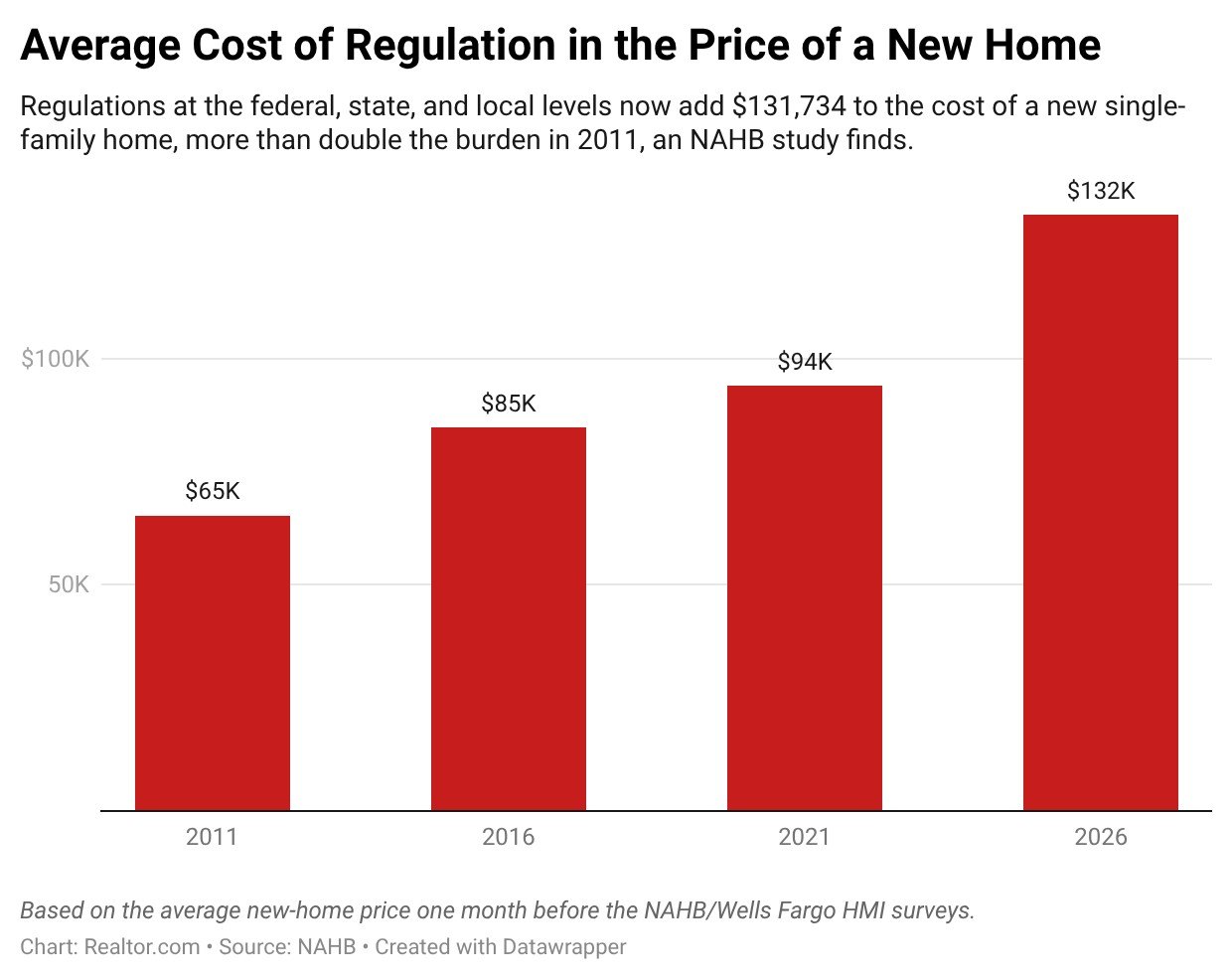
The NAHB's 2026 special study on government regulation in the price of a home lays out a stark picture. Regulatory costs now account for 26.4% of the average sales price of a new single-family home in the United States. With the average new home price sitting at $499,500 as of January 2026, that translates to approximately $131,734 in pure regulatory burden per home—costs that builders have no choice but to pass directly to buyers.
Perhaps even more alarming is the rate of growth. Those regulatory costs have surged nearly 40% over just five years, far outpacing general inflation and wage growth. That means the regulatory drag on housing affordability isn't just a static problem—it's an accelerating one.
What Exactly Are These Regulatory Costs?
When most people think of home-building costs, they picture raw materials, skilled labor, and land. But regulatory costs are woven into nearly every phase of the construction process, and they add up faster than many homebuyers realize. These costs fall into two broad categories.
Costs Imposed During Development and Construction
Before a single foundation is poured, developers face a gauntlet of regulatory requirements that eat into their budgets. These include:
- Zoning and land-use approvals that can take months or even years to navigate, during which developers are paying carrying costs on land they cannot yet build on.
- Environmental impact studies and mitigation requirements, which are often necessary even for straightforward residential projects.
- Permit fees that vary wildly by jurisdiction but have been climbing steadily across the country.
- Infrastructure mandates such as road improvements, utility hookups, and stormwater management systems that local governments require developers to fund as a condition of approval.
Costs Imposed After Construction Begins
Once construction is underway, a second wave of regulatory costs kicks in. These include mandatory inspections at multiple stages of the build, compliance with evolving building codes that can require more expensive materials or construction techniques, and energy efficiency mandates that—while well-intentioned—add thousands of dollars to the final product. Each of these requirements individually may seem modest, but cumulatively they compound into the six-figure figure the NAHB study identifies.
Why This Matters for the Housing Affordability Crisis
The United States was already grappling with a severe housing shortage before this study was published. Millions of housing units short of what's needed to meet demand—driven in large part by millennials and Gen Z households entering the market—the country needs more homes built faster and at lower cost. Instead, rising regulatory costs are pushing in exactly the opposite direction.
NAHB Chairman Bill Owens was direct in his assessment of the situation: "This study illustrates how excessive regulation is deepening the nation's housing affordability crisis and making it harder for builders to deliver the affordable, attainable housing that our nation sorely needs."
When more than a quarter of a home's price is attributable to regulatory compliance rather than the physical home itself, it raises a critical policy question: are these regulations delivering value commensurate with their enormous cost? In many cases, safety and quality standards are non-negotiable and genuinely protect buyers. But in others, layers of redundant bureaucracy, outdated codes, and slow permitting processes are adding cost without adding proportional value.
The Builder's Dilemma: Affordable Homes Are Increasingly Impossible to Build Profitably
One of the most underappreciated consequences of rising regulatory costs is their disproportionate impact on entry-level housing. When a builder carries a fixed regulatory overhead of over $130,000 per unit regardless of the home's size or price point, constructing a modest starter home becomes economically unviable. The math simply doesn't work. Builders are effectively pushed upmarket, focusing on larger, more expensive homes where the regulatory cost represents a smaller percentage of the total sale price and profit margins are more sustainable.
The result is a housing market that produces fewer and fewer affordable options for first-time buyers, working families, and lower-income households—precisely the people who need relief the most.
What Policymakers Can Do
The NAHB's Owens didn't just diagnose the problem—he called for action. "Policymakers should remove unnecessary and costly regulations that are pricing buyers out of the market and slowing construction of new homes and apartments," he said.
Meaningful reform could take several forms. Streamlining permitting timelines through digital processing and by-right zoning approvals could eliminate months of delay and thousands in carrying costs. Reviewing and modernizing outdated building codes to ensure requirements reflect current evidence rather than institutional inertia could reduce construction costs without compromising safety. Reforming impact fee structures so they don't disproportionately burden affordable housing projects is another lever policymakers at the state and local level can pull relatively quickly.
The Bottom Line for Homebuyers and the Market
For anyone hoping to buy a new home, the NAHB's findings are a sobering reminder that the sticker price reflects far more than just bricks, beams, and labor. Over $131,000 of what you'd pay for a new home today goes toward regulatory compliance—and that share has grown nearly 40% in five years with no signs of slowing.
Solving the housing affordability crisis will require action on multiple fronts, from increasing skilled labor supply to reforming land use policy. But if policymakers are serious about making homeownership accessible again, tackling the growing burden of government red tape on new construction isn't optional—it's essential.