
The Hidden Cost Most Homebuyers Completely Ignore
When most people shop for a home, they focus on the mortgage payment, the property taxes, and maybe the utility bills. What rarely makes it onto the spreadsheet is the car sitting in the driveway — and increasingly, that oversight is costing households tens of thousands of dollars over the life of a loan.
According to the U.S. Bureau of Labor Statistics, housing and transportation together accounted for a full 50% of household spending in 2024. Housing claimed the larger share at 33%, but transportation was close behind at 17%. Put simply, the way you get around every day is nearly as significant a financial burden as the roof over your head. And yet, very few buyers factor transportation costs into their affordability calculations before signing on the dotted line.
That disconnect is becoming harder and harder to ignore — especially as the cost of owning and operating a vehicle continues to climb to historic highs.
Car Ownership Costs Are at Record Highs
The price of driving has surged across nearly every category in recent years. New vehicles are now 33% more expensive than they were just five years ago. Used cars have risen even more sharply, with prices up more than 40% over the same period. For buyers who are stretching their budgets to afford a home in the first place, adding a car payment — or replacing an aging vehicle — can easily undo whatever savings they thought they'd found.
Insurance costs have followed a similarly steep trajectory. Nationally, auto insurance premiums have risen 19% in recent years, but in some states the increases exceed 50%. Gas prices, meanwhile, are hovering above $4 per gallon in many parts of the country, adding up quickly for anyone with a long daily commute.
When you add up a car payment, insurance, fuel, maintenance, and registration, the average American household spends well over $10,000 per year on transportation. For many families, that figure is significantly higher — and it rarely gets the same scrutiny as a mortgage rate.
Why "Drive Until You Qualify" Is Losing Its Appeal
For decades, one of real estate's most popular affordability strategies has been simple: if you can't afford to live near the city, keep driving until the prices drop low enough to qualify for a mortgage. It's advice that made a certain kind of sense when gas was cheap, car prices were manageable, and the gap between urban and suburban list prices was wide enough to justify the trade-off.
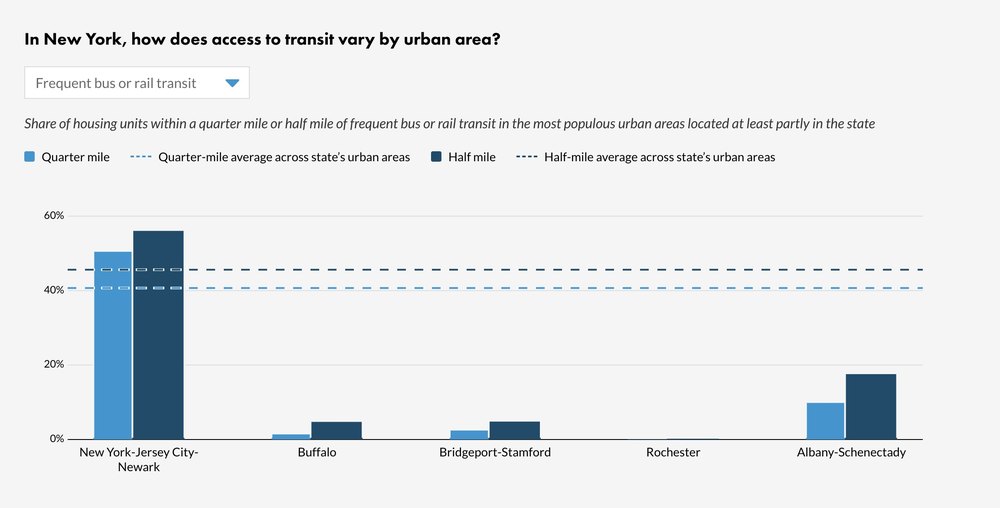
That math is rapidly changing. The areas farthest from urban employment centers — the ones where home prices are lowest — also tend to be the most car-dependent. Public transit is sparse or nonexistent, walkability scores are low, and residents often need two vehicles just to manage daily life. When you layer the true cost of that car dependency on top of even a modest mortgage, the savings from cheaper real estate can evaporate quickly.
A buyer who purchases a home $50,000 below what they could afford in a transit-accessible neighborhood may end up spending that difference — and more — on transportation costs over just a few years. The cheap house, in other words, may not actually be the affordable one.
Walkability and Transit Access: The Undervalued Home Feature
As households across the country try to reduce the total cost of daily living, one home feature is quietly becoming more valuable: walkability. Homes in neighborhoods where residents can walk to groceries, restaurants, schools, and transit stops allow families to reduce — or in some cases eliminate — their dependence on a second vehicle.
Transit-oriented housing, located near reliable bus lines, light rail, or commuter train stations, offers a particularly compelling proposition. When a family can commute without a car, the annual savings are immediate and measurable. Insurance premiums drop. Fuel costs shrink. Vehicle wear and tear slows down. Over a 30-year mortgage, those savings compound into a genuinely significant financial advantage.
This is why savvy buyers are increasingly treating walk scores and transit access the same way they treat square footage or school district ratings — as core criteria that directly affect what they can actually afford to own.
How to Evaluate True Affordability Before You Buy
If you're in the market for a home, here are a few practical steps to assess the full picture of what a property will actually cost you:
- Calculate your current transportation spend. Add up your car payments, insurance, fuel, maintenance, and registration. This is your baseline. Will the new location increase or decrease this number?
- Use a walk score tool. Websites like Walk Score offer free ratings for any address, measuring walkability, transit access, and bikeability. A higher score typically means lower car dependency.
- Research local transit options. Check whether the neighborhood is served by reliable bus or rail lines that connect to your workplace or everyday destinations.
- Run a total cost comparison. Compare two properties not just by purchase price and estimated mortgage, but by the combined monthly cost of housing plus estimated transportation. The results may surprise you.
- Think long-term. Car costs are trending upward. A home that reduces your vehicle dependency today may provide even greater financial relief five or ten years from now.
The Bottom Line
Affordability in real estate has always been more complicated than the sticker price suggests. But in an era of $4 gasoline, 40% used-car premiums, and sky-high auto insurance, the gap between what a home costs to buy and what it costs to live in has never been wider. Buyers who look beyond the listing price and account for the full cost of where they're choosing to live — including the car or cars they'll need to get through each day — are the ones most likely to find a home that's genuinely affordable, not just nominally cheaper. In today's market, walkability isn't a luxury amenity. It's one of the smartest financial features a home can have.