
The Retirement Crisis Hitting Older Millennials Hard
If you're an older millennial—someone born between 1981 and 1988—you're likely somewhere in your 40s right now. That means you have fewer than 20 years until the traditional retirement age of 65. And according to new research, the financial picture for your generation is more troubling than many realize.
A report by the Transamerica Center for Retirement Studies found that the median retirement savings for older millennials currently sits at just $73,000. Meanwhile, most 40-somethings believe they'll need around $500,000 to retire comfortably—and financial experts actually recommend closer to $1.6 million. That leaves older millennials roughly $427,000 short of even their own modest targets, and more than $1.5 million short of what advisers say is truly needed.
The gap is staggering. But understanding how it formed—and what can be done about it—is the first step toward closing it.
Why Older Millennials Are Behind: A Perfect Storm of Financial Setbacks
This generation didn't fall behind through carelessness. They entered the workforce at one of the worst possible moments in modern economic history—right into the teeth of the 2008 Great Recession. Entry-level jobs vanished, wages stagnated, and many millennials spent years underemployed or carrying student debt that would have otherwise gone toward savings.
Just as this generation began to find its financial footing, a new wave of challenges hit. Housing costs surged. Inflation spiked. Interest rates climbed. And for many older millennials now raising children or supporting aging parents, the financial squeeze became nearly impossible to escape.
Elias Friedman, founder and senior wealth adviser at Kadima Wealth in Schaumburg, IL, sees this pattern constantly among his clients. "Unfortunately, I see this shortfall often with my millennial clients. They came of age during the Great Recession and are now dealing with rising housing costs, inflation, and higher interest rates during some of their prime saving years. The focus is to make it through the month, not maximize retirement contributions," he explains.
That survival-mode mentality is entirely understandable—but it comes at a long-term cost that grows more serious with every passing year.
The Role of Housing Costs in the Retirement Gap
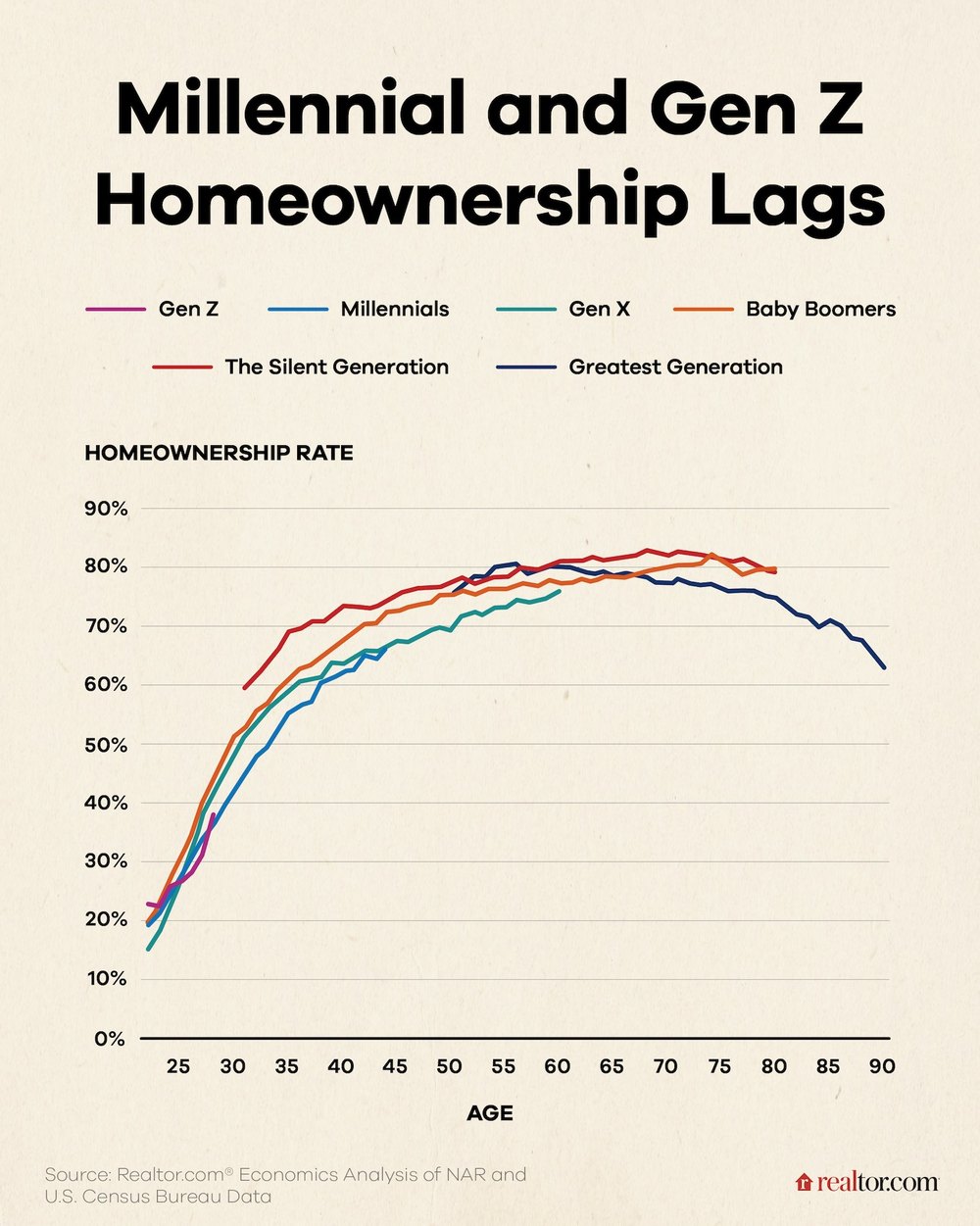
For previous generations, homeownership was the cornerstone of middle-class wealth building. Buying a home meant building equity, which could eventually support retirement or be passed down as an inheritance. That model worked when home prices rose gradually alongside wages.
For older millennials, that equation has broken down. Home prices in many markets have skyrocketed, and property taxes have followed. Meanwhile, wage growth for many middle-income workers has remained sluggish. The result is that a larger portion of take-home pay is being consumed by housing costs, leaving far less room for retirement contributions.
When your mortgage, rent, or property taxes eat up 35 to 40 percent of your income—or more—maxing out a 401(k) or IRA becomes a luxury rather than a priority. The housing affordability crisis isn't just a real estate problem; it's actively undermining the retirement security of an entire generation.
How Much Time Is Left—and Why It Still Matters
Here's the hard truth: time is the most powerful tool in retirement planning, and older millennials have less of it than younger savers. Compound interest works best over long stretches. Every year that passes without meaningful contributions is a year of potential growth that can never be recovered.
That said, fewer than 20 years is not nothing. A 42-year-old who begins aggressively saving today still has roughly 23 years before traditional retirement age. With the right strategies, consistent contributions, and smart investment choices, it is still possible to make meaningful progress—even from a significant deficit.
The key is starting now, not next year.
Practical Strategies to Catch Up on Retirement Savings
Maximize Catch-Up Contributions
One of the most valuable tools available to savers over 50 is the IRS catch-up contribution provision. Once you turn 50, you're allowed to contribute more to your 401(k) and IRA than the standard annual limits. In 2024, workers 50 and older can contribute up to $30,500 to a 401(k) and $8,000 to an IRA. For older millennials approaching 50, building toward these limits now—and maximizing them when eligible—can make a real difference over a 15- to 20-year horizon.
Revisit Your Budget With Retirement as a Non-Negotiable
Many financial advisers recommend treating retirement contributions the way you treat rent or a mortgage: as a fixed, non-negotiable expense. That shift in mindset can be transformative. Even increasing your monthly contribution by $100 or $200 compounds significantly over two decades. Consider conducting a full budget audit to identify areas—subscriptions, dining, discretionary spending—where money can be redirected toward your future.
Take Full Advantage of Employer Matching
If your employer offers a 401(k) match and you're not contributing enough to capture the full match, you're leaving free money on the table. Employer matching is effectively a 50 to 100 percent instant return on your contribution. Prioritizing this above almost any other financial move is a foundational rule of retirement planning.
Consider a Side Income Stream
For older millennials with a significant shortfall, a traditional budget adjustment alone may not be enough. Developing a secondary income stream—whether through freelancing, consulting, rental income, or a part-time business—and funneling those earnings directly into retirement accounts can accelerate savings considerably without disrupting your primary household budget.
Work With a Financial Adviser
Given the complexity of catching up on retirement savings while managing housing costs, debt, and family obligations, working with a qualified financial adviser can be invaluable. A professional can help you build a realistic roadmap, optimize your investment allocations for growth within your remaining time horizon, and identify tax-advantaged strategies you may not be aware of.
The Bottom Line: Behind Doesn't Mean Out
Being $427,000 behind your retirement target is a serious challenge—but it is not a death sentence for your financial future. Older millennials have faced enormous structural headwinds that were largely outside their control. What is within their control, starting today, is the commitment to act with urgency and intention.
The retirement gap is real. The time pressure is real. But so is the opportunity to make the next 15 to 20 years count. With focused effort, professional guidance, and a willingness to prioritize future financial security, older millennials can still build a retirement worth looking forward to.