
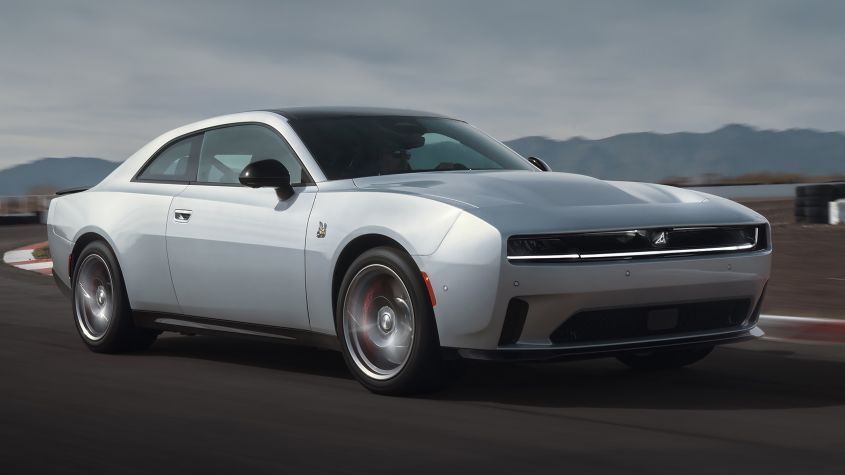
The New Dodge Charger Has Finally Crossed the Atlantic
After decades of being one of the most iconic nameplates in American automotive history, the new Dodge Charger has officially made its way to European shores. For car enthusiasts on the continent who have long admired the rumble of American muscle from afar, this is genuinely exciting news. However, there is one significant caveat that has already sparked considerable debate among fans and potential buyers alike: the new Dodge Charger is available in Europe in left-hand drive configuration only.
That means drivers in the United Kingdom, Ireland, Malta, Cyprus, and other right-hand drive markets across Europe will not be able to purchase a factory-standard new Charger through official channels. It is a bold and somewhat controversial decision from Stellantis, the parent company of Dodge, and it stands in stark contrast to what rival Ford has managed to achieve with the Mustang, which remains available in right-hand drive for markets that require it.
What Makes the New Dodge Charger Different This Time
The new generation Dodge Charger represents one of the most significant reinventions of the nameplate in its entire history. For the first time ever, the Charger is available not just as a traditional internal combustion engine vehicle, but also as a fully electric model. This dual-powertrain strategy reflects Dodge's broader attempt to modernise its lineup while still appealing to its passionate and often tradition-minded fanbase.
The ICE Powertrain: Keeping the Rumble Alive
The internal combustion engine variant of the new Charger carries on the muscle car legacy with a Hurricane inline-six turbocharged engine, replacing the legendary HEMI V8 that so many enthusiasts associate with the Dodge brand. Available in both standard and high-output configurations, the Hurricane six-cylinder produces impressive power figures that ensure the Charger remains firmly in the performance category. Purists may mourn the absence of the V8, but the performance numbers on the new engine are genuinely competitive, and the sound character, while different, still carries a sense of occasion.
The Electric Charger: A New Kind of Muscle
Perhaps the most talked-about version is the Dodge Charger Daytona, the fully electric variant that Dodge has been teasing and developing for several years. The Daytona is built on Stellantis' STLA Large platform and delivers the kind of instant torque figures that make traditional muscle car performance look modest by comparison. Dodge has even developed a proprietary system called Fratzonic Chambered Exhaust, which artificially generates a distinctive sound through the vehicle to satisfy those who feel that silence has no place in a muscle car.
The electric Charger represents a genuine philosophical shift for a brand that built its entire identity on raw, thunderous horsepower. Whether that shift resonates with buyers in Europe — a market far more receptive to electric vehicles than North America — remains to be seen.
Why Left-Hand Drive Only? The Business Case Behind the Decision
The decision to offer the Charger in Europe exclusively in left-hand drive configuration is ultimately a commercial one. Developing, testing, and certifying a right-hand drive variant of a vehicle requires substantial investment — in engineering, tooling, crash testing, and regulatory compliance across multiple markets. For a manufacturer assessing the likely sales volumes in right-hand drive European markets like the UK, the business case for that investment may simply not stack up.
The UK, while significant, represents a relatively small slice of the total European market, and American muscle cars have always been something of a niche proposition there. Dodge will have weighed projected demand against development costs and concluded that the return on investment does not justify a right-hand drive programme at this stage.
This puts the Charger in a different position from the Ford Mustang, which Ford has consistently offered in right-hand drive for decades. The Mustang's global sales volumes, particularly in Australia and the UK, provided the commercial justification Ford needed. Dodge is betting that continental European buyers — driving on the right, and increasingly open to electrification — represent a more strategically valuable target audience for the Charger's European debut.
How Does This Compare to the Ford Mustang in Europe?
The comparison to the Ford Mustang is one that will follow the Charger throughout its European sales life. The Mustang has successfully positioned itself as the accessible American sports car in European markets for years, available in right-hand drive and sold through a well-established dealer network. It has proven that appetite for American performance cars exists across the continent.
The Charger, arriving as both a combustion and electric option, is a more complex and arguably more ambitious product. But by restricting itself to left-hand drive, Dodge is conceding an entire segment of potential buyers to Ford and other rivals from the outset. For buyers in the UK who were hoping to pick up a brand-new Charger from a dealership, the official answer right now is a firm no.
What European Buyers Should Know Before Considering the Charger
- The new Dodge Charger is available in Europe through official Stellantis distribution channels, but exclusively in left-hand drive configuration.
- Both ICE (turbocharged Hurricane inline-six) and fully electric (Charger Daytona) variants are being offered in the European market.
- Right-hand drive market buyers in the UK, Ireland, Malta, and Cyprus are not catered for under the current product plan.
- European buyers should verify local homologation status, warranty terms, and servicing infrastructure before committing to a purchase, as dealer networks for Dodge vehicles in Europe remain limited compared to domestic American brands.
- Import regulations and emissions standards vary across European countries, so independent legal advice is recommended for buyers in markets where Dodge does not have a strong official presence.
The Bigger Picture: Can American Muscle Survive in a European Context?
The arrival of the new Dodge Charger in Europe raises broader questions about the appetite for American performance vehicles on the continent. European car culture, while undeniably enthusiastic, tends to favour precision engineering, refinement, and fuel efficiency — qualities historically associated more with German or Italian marques than with American muscle. The Charger, with its wide body, aggressive styling, and unapologetically theatrical character, is in many ways the antithesis of the typical European performance car ideal.
Yet there is clearly a market for it. American cars carry a cultural cachet that transcends pure engineering logic. Films, television, music, and decades of pop culture have embedded the Charger — alongside the Mustang and the Corvette — deep into the global automotive imagination. European buyers who want one do not necessarily want a rational choice; they want an experience, a statement, and a piece of American motoring mythology.
Whether Dodge can convert that cultural enthusiasm into meaningful sales figures in a left-hand drive Europe, where charging infrastructure is still developing and brand recognition among dealerships remains modest, is the real test that lies ahead.
Final Verdict: Exciting, But With Caveats
The new Dodge Charger arriving in Europe is, on balance, a positive development for fans of American performance cars. The dual powertrain strategy is forward-thinking, the design is dramatic, and the performance credentials are genuinely impressive. But the left-hand drive limitation is a real and meaningful restriction that will exclude a substantial number of enthusiastic potential buyers from accessing the car through official channels.
For drivers in continental Europe who already navigate left-hand traffic, the new Charger deserves serious consideration as an alternative to the Mustang or the growing range of European performance EVs. For UK and Irish buyers, for now at least, the dream of a factory-fresh Charger on British roads will have to wait — or be pursued through unofficial import routes that come with their own complications and costs.
Dodge has taken a decisive step into the European market. Whether the next step includes right-hand drive remains one of the more intriguing open questions in the American muscle car story.