
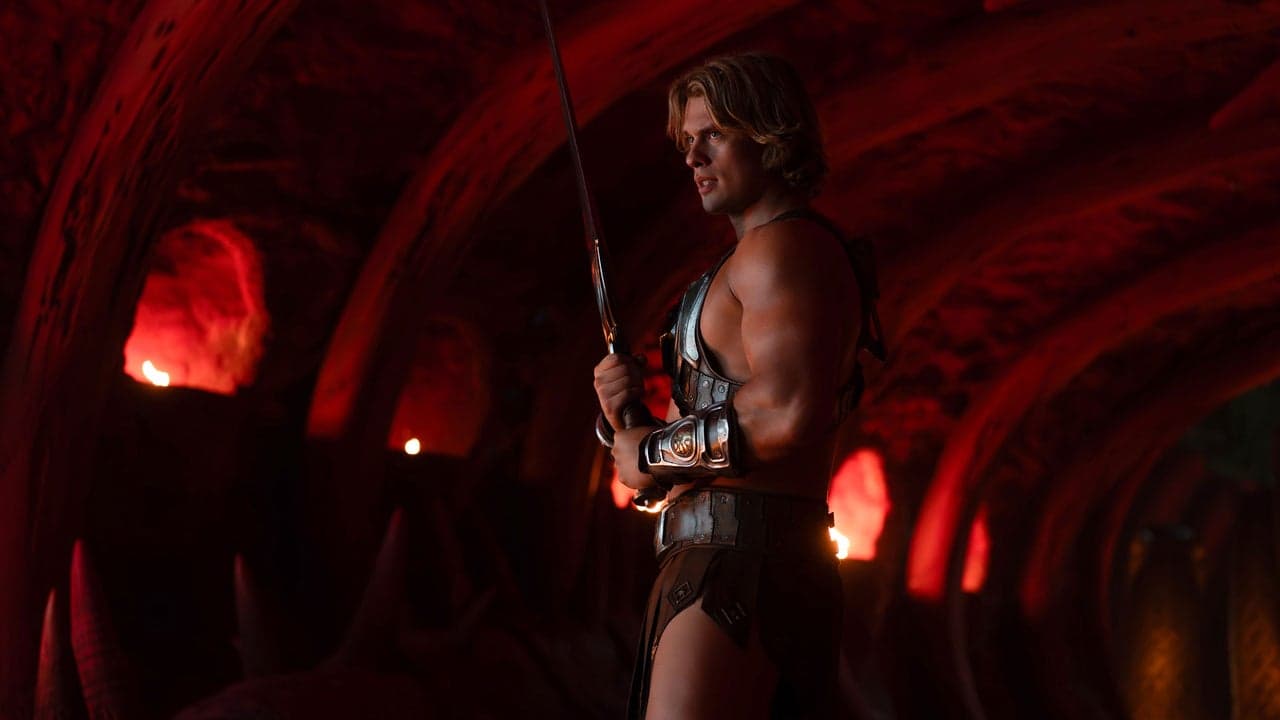
The Toy That Started as a Business Mistake
There is something oddly comforting about learning that one of pop culture's most beloved franchises was born not from creative genius, but from a corporate blunder. He-Man and the Masters of the Universe didn't originate in the mind of a visionary storyteller or a comic book artist laboring over page layouts at midnight. The muscle-bound hero of Eternia was, at his core, a business decision—a product designed to fill a gap that Mattel had catastrophically created for itself. And yet, decades later, a live-action Masters of the Universe film is scheduled for 2026, proving that sometimes the most accidental legacies become the most enduring ones.
Understanding the origins of He-Man is not just a fun piece of pop culture trivia. For marketers, entrepreneurs, and brand strategists, it is a masterclass in how to recover from failure, manufacture emotional attachment, and build a world that outlasts any single product cycle.
The Biggest IP Mistake in Hollywood History
In 1976, Mattel was offered the opportunity to license Star Wars toys. The company passed. At the time, science fiction films were not considered reliable merchandise engines, and Mattel's leadership failed to see what George Lucas was quietly negotiating his way into controlling: the merchandising rights to a cultural phenomenon that would generate billions of dollars in revenue across generations.
Kenner Products moved in and seized that opportunity instead. The result was one of the most profitable toy licensing deals in history, and Mattel was left on the sidelines watching. It was the kind of missed opportunity that doesn't just sting in the quarterly report—it reshapes a company's entire strategic identity.
But what Mattel did next is the part of the story that business schools should be teaching more frequently. Rather than dwelling on the loss, the company channeled its competitive energy into creating something entirely its own. No licensing fees. No creative compromises with a studio. No dependency on someone else's intellectual property. Instead, Mattel built its own universe from scratch.
How He-Man Was Born: Strategy Dressed as Creativity
Roger Sweet, a designer at Mattel, is widely credited with the initial concept for He-Man. The idea was deliberately broad and archetypal: an impossibly powerful barbarian warrior with a heroic physique, a magical sword, and a world full of enemies to fight. The character was designed to be the anchor of an entire toy line, not just a single action figure. Every element of his universe—Castle Grayskull, Skeletor, Battle Cat, Man-At-Arms—was engineered to sell additional products.
This is where the story could easily become cynical. He-Man was, by design, a marketing vehicle. His cartoon, He-Man and the Masters of the Universe, which launched in 1983, was produced primarily to advertise the toy line. Each episode was, in practical terms, a 22-minute commercial. The Federal Communications Commission would later tighten regulations around this kind of programming, but in the early 1980s, it was a legally and commercially effective strategy.
And yet something unexpected happened. Children didn't watch the cartoon as an advertisement. They watched it as a story. They attached emotionally to the characters, debated the mythology of Eternia, and carried their affection for He-Man well into adulthood. The commercial intent became invisible beneath the layers of world-building and character development that the writers and animators genuinely invested in.
What Marketers Can Learn from Mattel's Playbook
The Masters of the Universe story contains several powerful lessons for anyone trying to build a brand or recover from a strategic setback.
Own Your IP Entirely
One of the most consequential decisions Mattel made after the Star Wars debacle was to create intellectual property it owned completely. Licensing deals can generate revenue, but they create dependency. When you own the universe, you control the narrative, the licensing terms, the timeline, and the long-term value. He-Man belonged to Mattel in every meaningful sense, and that ownership is precisely why the franchise has survived decades of cultural shifts, reboots, and format changes.
Build a World, Not Just a Product
He-Man was not marketed as a single toy. He was the entry point into an entire ecosystem. Castle Grayskull was the environment. Skeletor was the antagonist. Battle Cat was the companion. Each new character or vehicle expanded the world and, crucially, gave children a reason to ask for more. Modern brand builders call this universe-building or ecosystem thinking. Mattel was practicing it in the early 1980s before the terminology existed.
Emotional Attachment Transcends the Original Medium
The fact that He-Man started as a toy line and became a cartoon, then a live-action film in 1987, then a series of reboots and revivals, and is now returning to theaters in 2026 demonstrates an important truth: when audiences genuinely love a character or world, they will follow it across any medium. The original commercial intent is irrelevant once emotional investment takes hold. Marketers should not be discouraged from building something commercial, but they should invest enough in quality and depth to make the commercial underpinnings invisible.
Failure Can Redefine Your Direction
Mattel's rejection of Star Wars was, in hindsight, one of the most valuable mistakes the company ever made. It forced the organization to stop relying on external IP and develop internal creative capabilities. Without that missed opportunity, there may never have been a He-Man, a Barbie cinematic universe, or the vertically integrated entertainment strategy Mattel now pursues. The company's willingness to absorb a failure and respond with invention rather than retreat is perhaps the most instructive part of the entire story.
The Legacy Continues
The upcoming live-action Masters of the Universe film is not a nostalgia cash-grab in isolation. It is evidence of a brand that was built with enough structural integrity to remain culturally relevant across four decades. He-Man was never supposed to be anything more than a toy. That he became a symbol of an era, a subject of serious pop culture analysis, and the basis of a major motion picture in 2026 is testament to what happens when commercial ambition is paired with genuine world-building craft.
For marketers and entrepreneurs navigating their own missed opportunities, Mattel's story offers an enduring message: the doors that close on you are sometimes the reason you build something that lasts far longer than any borrowed opportunity ever could.