
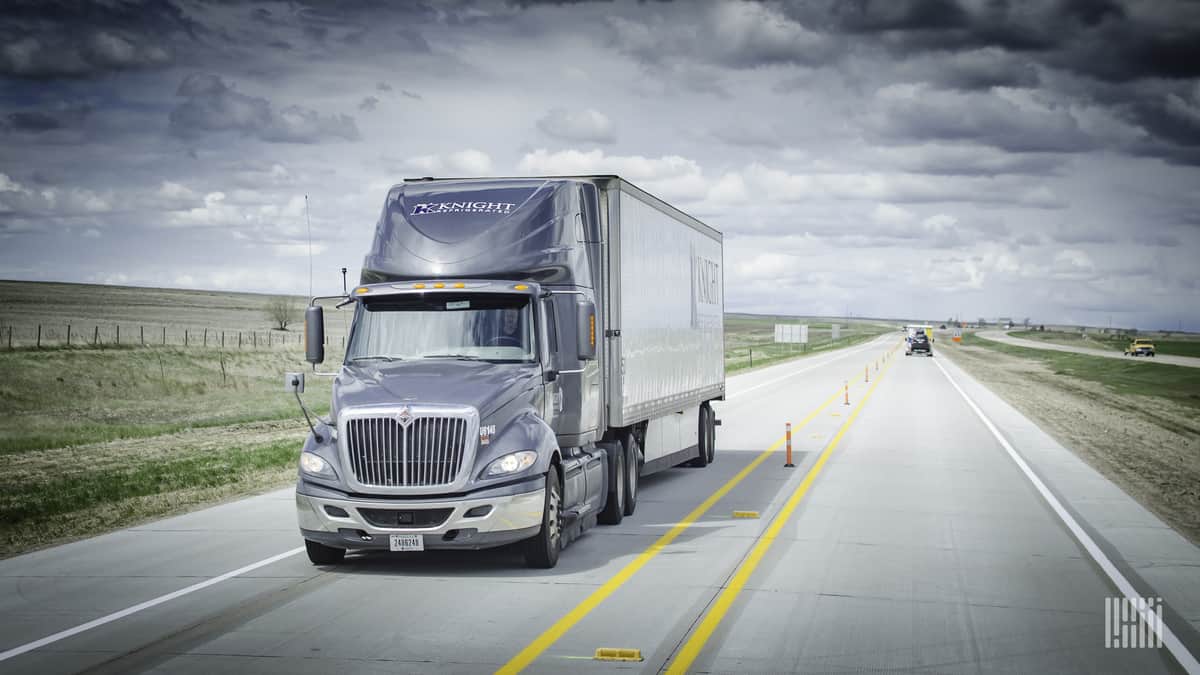
When a Big Idea Becomes a Billion-Dollar Warning Sign
It started with a genuinely compelling premise. Take the scale, infrastructure, and data capabilities of a trucking giant and use them to solve a real problem: affordable, safety-linked insurance for small carriers. Require telematics. Mandate cameras. Tie coverage to membership in a safety association. Let the data manage the risk, and let the market reward carriers who actually cared about operating safely. On paper, it was innovative. In practice, it became one of the most expensive and consequential insurance failures in the history of the American trucking industry.
The collapse of the Mohave Transportation Insurance Company program left behind a $130 million crater, a trail of dangerous carriers still rolling on U.S. highways, and a set of regulatory failures so glaring they raise serious questions about how the industry is overseen at both the state and federal level. This is the full story of what went wrong, why it matters, and what it means for the future of trucking insurance.
The Origins of the Mohave Deal
In 2004, Knight-Swift quietly established Mohave Transportation Insurance Company as an Arizona-domiciled captive insurer, assigned NAIC CoCode 14349, and headquartered at 2200 S. 75th Avenue in Phoenix. For years, the entity sat largely dormant, used for internal purposes while the broader trucking world moved on without noticing it existed.
Then came 2020. The freight market exploded under the pressures and peculiarities of the COVID-19 era. Stimulus checks, supply chain chaos, and an e-commerce surge created unprecedented demand for freight capacity. Tens of thousands of new small carriers entered the market almost overnight, many of them undercapitalized, undertrained, and underinsured. Knight-Swift saw an opportunity.
By September 2021, the company made its ambitions public. The program was marketed as a full-service ecosystem for small carriers — combining insurance, telematics technology, safety training, and membership in a structured safety association. The pitch was straightforward: prove you are serious about safety, install the technology, and you will get access to affordable coverage backed by one of the biggest names in American trucking. It was, by any measure, a bold and genuinely interesting concept.
How the Program Unraveled
What the press releases did not account for was the gap between the promise of data-driven risk management and the reality of executing it at scale across thousands of independent small carriers. The telematics and camera systems that were supposed to provide continuous insight into carrier behavior require consistent monitoring, competent analysis, and a willingness to act on what the data reveals — including canceling policies when the numbers turn dangerous.
That last part, it appears, did not happen with nearly enough consistency or urgency. Carriers whose telematics data flagged serious safety concerns continued to carry active insurance certificates. Policies that should have been terminated based on behavioral data remained in force. And the safety association membership requirement, which was supposed to serve as an additional quality filter, did not function as the meaningful gatekeeping mechanism the program's designers had envisioned.
The result was a program that, rather than concentrating coverage among safer operators, became a vehicle for insuring carriers who never should have been on the road in the first place. Those carriers kept rolling — across state lines, through populated corridors, hauling freight on behalf of brokers and shippers who trusted that an insurance certificate meant something.
A $130 Million Collapse and Regulatory Silence
The financial damage ultimately reached $130 million, making the Mohave program one of the most costly single experiments in trucking insurance history. Yet perhaps more troubling than the dollar figure is the question of who was watching — and who wasn't.
The Federal Motor Carrier Safety Administration, the agency specifically tasked with keeping dangerous carriers off American highways, did not identify and act on the problem during the years the program was deteriorating. The Biden administration's FMCSA, operating with the full weight of federal regulatory authority and access to safety data, did not intervene in a meaningful or timely way.
The Arizona Department of Insurance, the state-level body that should have been monitoring Mohave's financial health and operational compliance as a domiciled insurer, ultimately issued a consent order — not for enabling a wave of unsafe carriers, not for failing to act on alarming telematics data, but essentially over missed phone calls and administrative responsiveness failures. The gap between the severity of the outcome and the nature of the regulatory response is difficult to overstate.
What This Means for the Trucking Insurance Industry
The Mohave disaster raises uncomfortable but necessary questions that the trucking industry, insurance sector, and regulatory community all need to reckon with seriously.
- Data without enforcement is theater. Telematics and camera systems are only as valuable as the willingness to act on what they reveal. If flagged carriers continue to receive coverage because cancellation is commercially inconvenient or operationally complex, the technology provides a false sense of security rather than genuine risk management.
- Captive insurers require robust oversight. The captive structure that made Mohave possible also created layers of complexity that appear to have frustrated timely regulatory intervention. State insurance regulators need clearer frameworks and greater urgency when captives serving high-risk commercial lines show signs of distress.
- Federal safety oversight has real gaps. FMCSA's failure to detect and act on a pattern of dangerous carriers receiving and retaining insurance certificates points to structural weaknesses in how federal safety data is correlated with insurance program performance.
- Scale does not equal safety expertise. Being large in trucking operations does not automatically translate into competence in insurance underwriting, claims management, or regulatory compliance. The two disciplines require fundamentally different capabilities.
The Broader Stakes for Small Carriers and the Public
For the tens of thousands of small carriers who obtained certificates through the Mohave program, the story has different textures. Some of them may have been entirely legitimate operators who simply took advantage of an affordable option. Others, based on the trajectory of the program's losses and safety record, almost certainly should never have been insured at all.
For the American public sharing roads with commercial trucks, the Mohave collapse is a reminder that an insurance certificate is not the same thing as a safety guarantee. The systems designed to keep dangerous carriers off highways depend entirely on the integrity of the institutions administering them. When those institutions fail — whether through negligence, misaligned incentives, or simple incompetence — the consequences are measured not just in dollars but in lives.
Lessons the Industry Cannot Afford to Ignore
The Mohave Transportation Insurance story is not simply a cautionary tale about one company's failed experiment. It is a case study in systemic failure — of underwriting discipline, of regulatory vigilance, and of the assumption that good technology automatically produces good outcomes. The $130 million loss is recoverable. The erosion of trust in insurance-backed safety systems, and the very real danger posed by carriers who operated without adequate oversight for years, carries costs that are much harder to quantify and much slower to repair.
As the trucking industry continues to absorb new entrants, experiment with usage-based insurance models, and grapple with the ongoing availability crisis in small carrier coverage, the lessons of Mohave deserve serious attention. Innovation in insurance is necessary and valuable. But it has to be matched with the operational discipline, regulatory accountability, and genuine commitment to safety that the stakes demand.