
Why the Human Side of HR Is More Important Than Ever
Human Resources has always sat at the intersection of policy and people. HR professionals are expected to enforce compliance, manage legal risk, navigate difficult conversations, and somehow do all of that while remaining approachable, empathetic, and fair. It is a balancing act that rarely gets the credit it deserves — and it is exactly why the concept of "the human side of HR" has become such a vital conversation in workplaces around the world.
In a field that is increasingly shaped by technology, automation, and data-driven decision-making, it can be easy to lose sight of the most fundamental truth in HR: the work is about people. Every policy affects a real human being. Every termination, every performance review, every accommodation request, every harassment complaint — behind each of these transactions is a person whose life and livelihood are directly impacted by how HR responds.
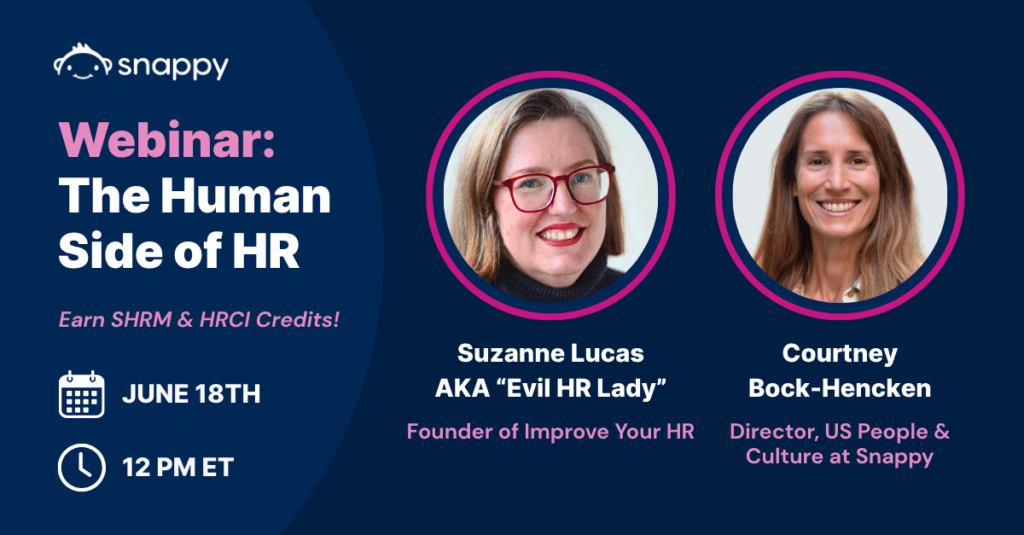
That is why events like the free webinar The Human Side of HR, featuring Suzanne Lucas and Courtney Bock-Hencken, are so valuable. These conversations remind HR practitioners that staying grounded in humanity is not just a nice-to-have — it is what makes great HR possible.
What Does "The Human Side of HR" Actually Mean?
When people talk about the human side of HR, they are referring to the emotional intelligence, ethical judgment, and interpersonal awareness that go far beyond anything you can find in an employee handbook. It is about how an HR professional walks into a difficult conversation and creates a space where the other person feels heard, even when the outcome is not in their favor.
It means recognizing that employees are not resources to be managed — they are human beings with fears, ambitions, family pressures, mental health struggles, and personal lives that inevitably show up at work. The HR professionals who thrive are the ones who never forget that reality, no matter how buried they are in compliance deadlines or headcount spreadsheets.
This does not mean being a pushover or letting emotions override sound judgment. In fact, the most human HR professionals are often the most decisive. They make hard calls, but they do it with clarity and care. They hold people accountable while still treating them with dignity. That combination — firmness and compassion — is the hallmark of truly excellent HR practice.
The Daily Realities of HR Life
Ask any seasoned HR professional what their job is really like, and you will hear stories that rarely make it into job descriptions. The daily realities of HR life include some of the most emotionally demanding work in any organization.
- Managing confidentiality under pressure: HR professionals often hold sensitive information that affects multiple parties simultaneously — a pending layoff, a disciplinary investigation, a mental health disclosure. Carrying that weight day after day takes a toll that most colleagues never see.
- Being the bearer of bad news: Whether it is a termination, a denied leave request, or an unsuccessful complaint, HR is frequently the person who delivers news that changes someone's life. Doing that with care and professionalism requires real emotional resilience.
- Navigating competing loyalties: HR serves both the organization and its employees, and those interests do not always align. Finding the right path when priorities conflict is one of the most complex and under-discussed challenges in the profession.
- Combating burnout: Because HR absorbs so much of the emotional friction in a workplace, practitioners are at high risk of compassion fatigue and burnout — particularly if they do not have strong peer support or professional communities to lean on.
- Staying current in a changing landscape: Employment law, DEI initiatives, remote work policies, AI in the workplace — the field evolves constantly, and HR professionals are expected to keep pace while still managing the day-to-day.
How HR Professionals Can Keep It Human
So how do you sustain the human side of HR when the job is this demanding? There is no single formula, but there are practices that consistently make a difference for HR professionals who manage to stay empathetic without burning out.
Build Real Relationships Before You Need Them
The HR professionals who are most effective in crisis situations are the ones who have invested in relationships during the quiet times. Walking the floor, checking in with managers, attending team lunches — these small investments create the trust that makes difficult conversations possible. When employees see HR as a person rather than a function, they are far more likely to come forward early, before small problems become major ones.
Practice Active Listening as a Professional Skill
Active listening is not simply staying quiet while someone else speaks. It involves reflecting what you hear, asking clarifying questions, and resisting the urge to jump to solutions before the other person feels fully understood. In HR, this skill can mean the difference between a resolved grievance and an escalated lawsuit. It is worth developing intentionally, not leaving to chance.
Find Your Professional Community
HR can be an isolating profession because so much of the work is confidential. Finding a community of fellow HR practitioners — through associations, online forums, local networks, or events like the Human Side of HR webinar — provides the sounding board that every HR professional needs. Hearing how others navigate similar challenges is both practically useful and emotionally sustaining.
Set Boundaries That Protect Your Capacity to Care
Ironically, one of the most human things an HR professional can do is protect their own humanity. That means setting boundaries around work hours, saying no to tasks that fall outside your scope, and taking your own mental health seriously. You cannot sustain empathy for others if you are running on empty.
Why Continuing the Conversation Matters
Events like the free webinar hosted by Suzanne Lucas and Courtney Bock-Hencken are not just professional development opportunities — they are reminders that the challenges HR professionals face are shared, not isolated. When experienced practitioners speak openly about the daily realities of HR life and how they keep it human, they give permission to the wider community to do the same.
The more HR professionals talk honestly about the emotional weight of the work, the better equipped the entire profession becomes to support both the people it serves and the practitioners doing the serving. That kind of candid, community-driven conversation is exactly what moves HR forward — not just as a business function, but as a genuinely human endeavor.
If you are an HR professional looking to reconnect with the purpose behind the policies, carve out the time to engage with resources and events that put people back at the center of the conversation. Your employees — and your own wellbeing — will be better for it.