
What Is a One on One Meeting?
A one on one meeting — often written as a 1:1 meeting — is a dedicated, recurring conversation between a manager and one of their direct reports. Unlike team meetings or project standups, a 1:1 creates a private space where both parties can speak openly. Employees get uninterrupted time to discuss challenges, share ideas, and seek guidance. Managers, in turn, gain valuable insight into team morale, individual progress, and emerging roadblocks before they escalate.
While the format might seem simple, the impact of a well-run 1:1 meeting is significant. Research consistently shows that employees who have regular, meaningful check-ins with their managers report higher engagement, stronger job satisfaction, and better overall performance. When done right, these meetings are one of the most powerful tools in a manager's toolkit.
Why You Need a One on One Meeting Template
Without structure, 1:1 meetings can quickly drift off course — turning into status updates, complaint sessions, or worse, getting canceled altogether because neither party feels prepared. A one on one meeting template solves this problem by providing a consistent framework that keeps conversations focused, purposeful, and productive.
A good template helps both managers and employees arrive prepared, ensures that important topics don't get overlooked, and creates a record of what was discussed and agreed upon. Over time, these records become invaluable for tracking progress, identifying patterns, and supporting performance reviews.
Whether you're a first-time manager or a seasoned HR professional, using a structured one on one meeting agenda removes the guesswork and lets you focus on what matters most: the conversation itself.
What Should a One on One Meeting Agenda Include?
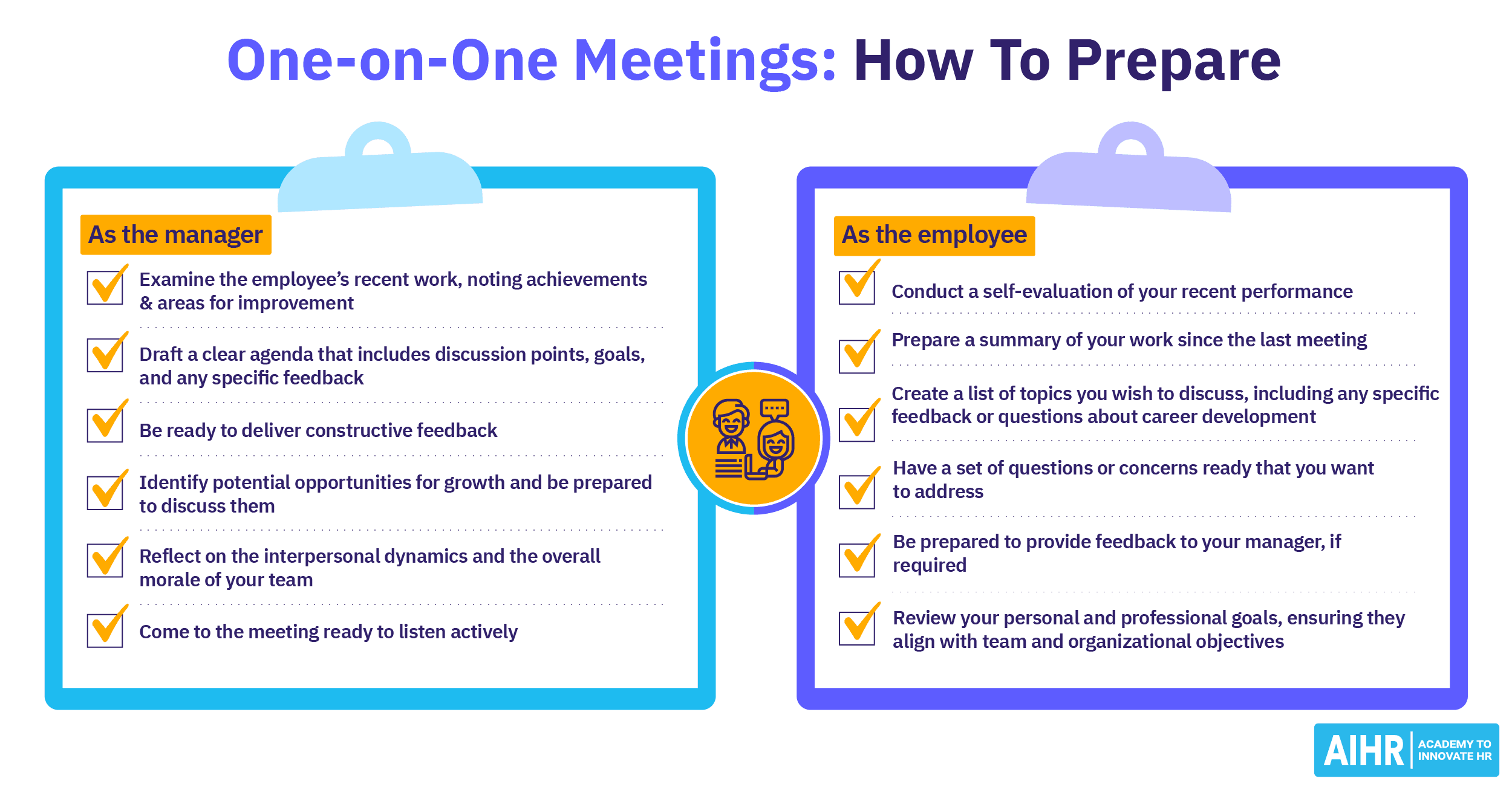
An effective 1:1 meeting agenda doesn't need to be complicated. In fact, the simpler and more consistent it is, the easier it becomes for both parties to prepare. A strong one on one meeting template typically covers the following areas:
- Check-in and wellbeing: A brief opening to gauge how the employee is doing personally and professionally. This sets a human tone for the conversation.
- Progress and priorities: A review of what the employee has been working on since the last meeting, including wins, blockers, and upcoming priorities.
- Feedback exchange: An opportunity for both the manager and employee to share constructive feedback in a low-pressure setting.
- Career development and growth: Time to discuss longer-term goals, learning opportunities, and what the employee needs to progress in their role.
- Action items and next steps: A summary of commitments made by both parties, with clear ownership and deadlines.
You don't have to cover every topic in every meeting. The agenda can and should flex based on what's most relevant at the time. What matters is that there is a structure to fall back on so that meetings remain intentional.
The Purpose of a One on One Meeting
At its core, the purpose of a 1:1 meeting is to build and maintain a strong working relationship between a manager and their direct report. But the benefits extend well beyond relationship-building. Regular one on one meetings serve several important functions:
- Early problem detection: Managers can spot issues — whether performance-related, interpersonal, or operational — before they grow into larger problems.
- Employee empowerment: Employees who have a reliable outlet for sharing concerns and ideas feel more valued and engaged.
- Alignment: 1:1s ensure that individual goals remain aligned with broader team and organizational objectives.
- Trust building: Consistent, honest conversations between managers and employees create psychological safety, which is foundational to a high-performing team.
- Performance support: Regular check-ins provide a natural rhythm for setting expectations, recognizing achievements, and addressing areas for improvement.
Best Practices for Effective One on One Meetings
Having the right template is a great start, but how you show up to the meeting matters just as much. Here are some proven best practices for making your 1:1 meetings as effective as possible.
Keep Them Regular and Protect the Time
One of the most common mistakes managers make is canceling 1:1 meetings when things get busy. This sends a signal that the meeting — and by extension, the employee — isn't a priority. Aim to hold 1:1s at least every two weeks, and treat them as non-negotiable appointments unless a genuine emergency arises.
Let the Employee Drive the Agenda
While it's helpful for managers to come with talking points, the 1:1 should primarily be the employee's meeting. Encourage your direct reports to add agenda items in advance and to own the direction of the conversation. This increases buy-in and ensures that the topics discussed are relevant to the person who needs them most.
Take Notes and Follow Up on Action Items
A meeting without follow-through quickly loses its value. Use your one on one meeting template to capture action items, decisions, and commitments in real time. Review these at the start of the next session to demonstrate accountability and maintain momentum.
Make Space for the Difficult Conversations
The 1:1 setting is the ideal place to address sensitive topics — underperformance, interpersonal friction, burnout, or career dissatisfaction. Don't avoid these conversations. A well-structured, psychologically safe meeting space makes it easier to approach them constructively before they become crises.
Download Your Free One on One Meeting Templates
To help you get started, a full collection of free one on one meeting templates is available for download in multiple formats, including Word, Excel, Google Docs, and PDF. Whether you prefer a simple agenda template or a more comprehensive employee check-in document, there's a format to suit every management style and team need.
Using a professionally designed one on one meeting template removes the barrier to getting started and helps you build the habit of consistent, high-quality 1:1 meetings. Over time, these conversations compound — creating stronger teams, more confident employees, and better outcomes across the board.
Start with one template, adapt it to your style, and watch what happens when your team knows they have your full attention, every single week.