
The Real Workplace Experts Are Sprinting to Daycare Pickup
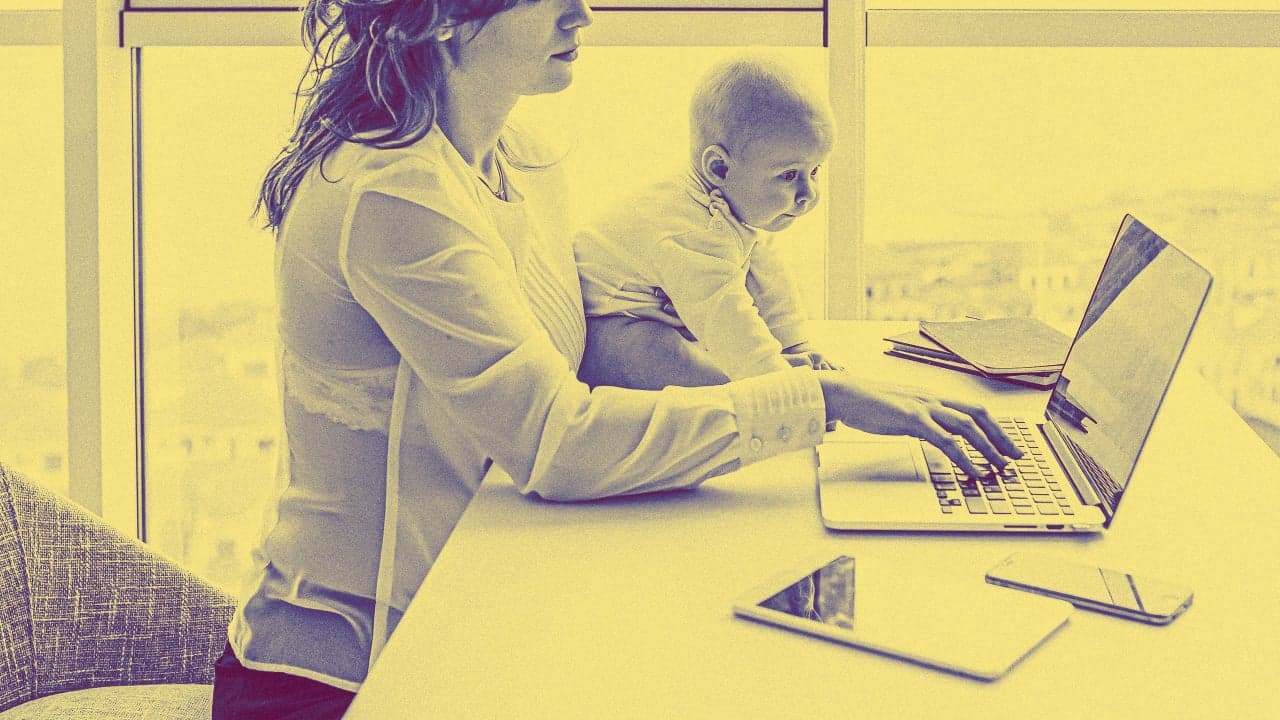
If you want an honest answer about whether your workplace is built for the future, skip the boardroom. Skip the quarterly all-hands meeting and the carefully worded mission statement on the lobby wall. Instead, find the woman racing out the door at 5:00 p.m., laptop bag on one shoulder and a breast pump on the other, mentally calculating whether she can make daycare pickup before they charge the late fee — again. She knows the truth about your company better than your CEO does.
For years, the conversation around working mothers has been framed almost entirely around accommodation. Flexible schedules. Lactation rooms. Extended parental leave. Compassion when the baby spikes a fever for the fourth week in a row. These things matter enormously, and organizations that fail to provide them are failing their employees in a very real, very measurable way. But somewhere along the way, that framing quietly led us to ask the wrong question. We've been asking: What do mothers need from work? It's time to flip it: What can work learn from mothers?
Why the Maternal Mindset Is a Workplace Superpower
Motherhood, particularly in those dense, disorienting early years, is essentially a masterclass in constraint-based performance. New mothers operate under conditions that would break most optimized corporate systems: chronic sleep deprivation, radically compressed windows of available time, emotional load that never fully powers down, and an ever-shifting set of variables that no project management tool can fully account for. And yet, most of them still deliver — at work, at home, and in the impossible overlap between the two.
That's not luck. That's a specific, learnable skill set that the modern workplace desperately needs and almost never thinks to study.
Radical Prioritization Over Performative Busyness
A new mother on a compressed schedule cannot afford to spend forty-five minutes in a meeting that could have been an email. She cannot afford to let low-stakes tasks bleed into hours of unfocused effort. She has learned, by necessity, to ruthlessly distinguish between what is urgent, what is important, and what is simply noise dressed up as productivity. The result is often a clarity of focus that more "available" colleagues struggle to replicate.
Workplaces obsessed with long hours and visible presence often mistake activity for output. Mothers, particularly those navigating the impossible math of childcare logistics, tend to be acutely aware of that distinction. Their time is quantifiably finite in a way that forces honest accounting. That discipline, applied at an organizational level, could transform how teams set priorities, structure meetings, and measure real contribution.
Systems Thinking Under Pressure
Managing an infant — or a toddler, or both simultaneously — requires the kind of adaptive systems thinking that business schools charge a great deal of money to teach. Feeding schedules intersect with nap windows. Childcare backup plans require backup plans. A single variable shifting, like a sick caregiver or an unexpected work deadline, creates a cascade that demands immediate reconfiguration. New mothers live in that cascade. They become expert at anticipating failure points, building redundancy, and executing pivots without the luxury of a planning retreat.
Organizations navigating supply chain volatility, remote team coordination, or rapid market shifts could genuinely benefit from elevating this kind of thinking. It's not soft skill territory. It's operational resilience, and mothers practice it before breakfast.
Empathy as Strategic Intelligence
New parenthood tends to expand emotional range in ways that are professionally undervalued but organizationally critical. Mothers who have learned to read a nonverbal infant, to regulate their own stress response in high-pressure moments, and to maintain functional relationships while running on minimal sleep have developed an emotional intelligence that translates directly into stronger team leadership, more effective communication, and better conflict resolution.
Research has consistently linked empathetic leadership to higher employee retention, greater team psychological safety, and improved organizational performance. Yet workplaces continue to treat empathy as a nice-to-have rather than a core competency. Mothers who have forged it through lived experience are walking proof that it can be cultivated and that it pays off.
Rethinking the Value We Place on Working Mothers
The traditional workplace narrative has positioned mothers as a population that requires managing — a group whose needs must be balanced against operational demands. The flex schedule is granted. The leave policy is negotiated. The accommodations are made, sometimes graciously and sometimes reluctantly, but almost always framed as a cost rather than an investment.
That framing is not only outdated. It's leaving significant value on the table.
Workplaces that genuinely want to prepare for what comes next — distributed teams, AI-assisted workflows, purpose-driven talent expectations, economic volatility — need people who can perform under pressure, communicate across difference, make fast decisions with incomplete information, and keep their humanity intact while doing it. New mothers have been training for exactly that role, largely without recognition or reward.
The Question Every Organization Should Be Asking Now
The future of work will belong to organizations that stop managing around human complexity and start building systems that actually reflect it. That means rethinking not just what support looks like for working parents, but what leadership looks like, what productivity looks like, and whose experience is treated as a source of organizational wisdom.
New mothers are not a workforce liability to be carefully accommodated. They are, in many cases, the most efficient, adaptive, and emotionally capable operators in the building. The organizations smart enough to recognize that — and to build cultures where that expertise is genuinely valued — are the ones most likely to get the future of work right.
So the next time you want to know whether your workplace is ready for what's ahead, don't ask the CEO. Ask the woman who figured out how to lead a team meeting, arrange emergency childcare, hit a project deadline, and still make it to pickup on time. She's been living the future of work. You just haven't been taking notes.