
Why Individual Development Plans Matter in Today's Workplace
Professional development is no longer a nice-to-have perk — it's a strategic priority for organizations that want to attract and retain top talent. According to TalentLMS, 73% of employees say stronger learning and development opportunities would make them stay longer at their company. That's a compelling number for any HR leader or manager looking to reduce turnover and build a more capable workforce.
Individual development plans (IDPs) sit at the heart of this effort. They give employees a structured, personalized roadmap for building new skills, setting career goals, and tracking their progress over time. Unlike broad training programs pushed from the top down, IDPs are employee-driven — making them far more likely to result in meaningful, lasting growth.
In this article, we'll break down what an IDP actually is, explore nine practical individual development plan examples across different roles and goals, and highlight the key elements every strong IDP template should include.
What Is an Individual Development Plan (IDP)?
An individual development plan is a documented, action-oriented plan that outlines an employee's professional goals, the skills they need to develop, and the specific steps they'll take to get there. It typically covers a defined time period — often six months to a year — and is created collaboratively between the employee and their manager.
IDPs are used across industries and job levels, from entry-level hires building foundational skills to senior leaders preparing for executive roles. What makes them effective is their specificity: rather than vague aspirations like "get better at communication," a strong IDP sets measurable targets, identifies learning resources, and establishes check-in milestones.
The Key Benefits of Individual Development Plans
Before diving into individual development plan examples, it's worth understanding why so many organizations are investing in this approach. The benefits extend to both the employee and the business.
- Improved retention: Employees who see a clear path for growth are far less likely to look elsewhere. IDPs signal that the organization is genuinely invested in their future.
- Better performance: When employees know exactly what skills to develop and why, they're more motivated and focused — leading to stronger on-the-job performance.
- Succession planning: IDPs help organizations identify and prepare high-potential employees for future leadership roles, reducing the risk of talent gaps.
- Stronger manager-employee relationships: The collaborative nature of IDP creation encourages regular, meaningful conversations between managers and their direct reports.
- Alignment between individual and organizational goals: IDPs can be designed to connect personal development ambitions with broader business objectives, ensuring that employee growth serves the company's strategic direction.
9 Individual Development Plan Examples
The following individual development plan examples cover a wide range of scenarios, roles, and development needs. Each one illustrates how an IDP can be tailored to specific circumstances while following the same core structure.
1. New Employee Onboarding IDP
Designed for employees in their first 90 days, this IDP focuses on getting up to speed quickly. Goals typically include learning internal tools, understanding team processes, and building relationships with key stakeholders. Milestones are short-term and frequent to keep momentum high.
2. Leadership Development IDP
This example targets high-potential employees being groomed for management. Development areas often include strategic thinking, conflict resolution, delegation, and executive communication. Activities might include mentorship programs, leadership workshops, or stretch assignments managing cross-functional projects.
3. Technical Skills IDP
Common in IT, engineering, and data roles, this IDP focuses on closing specific technical skill gaps. For example, a data analyst might set a goal to become proficient in Python within six months, with learning resources, practice projects, and a certification exam as key milestones.
4. Communication and Soft Skills IDP
This plan targets interpersonal and professional communication abilities — particularly valuable for employees who are strong technically but need to grow in areas like public speaking, executive presence, or written communication. Toastmasters membership, presentation opportunities, and feedback sessions are common development activities here.
5. Performance Improvement IDP
Unlike the others, this IDP is triggered by a performance concern rather than a growth ambition. It sets clear, measurable expectations the employee must meet within a defined timeframe, along with the support and resources provided to help them get there. These plans require careful documentation and regular manager check-ins.
6. Career Transition IDP
Used when an employee wants to move into a new function or role — for instance, transitioning from sales to marketing, or from an individual contributor to a people manager. The IDP maps out the competency gaps between the current and target role and builds a bridge to close them.
7. Remote Work Skills IDP
As distributed teams have become the norm, some employees need targeted support in areas like asynchronous communication, time management, digital collaboration tools, and virtual presence. This IDP example is increasingly relevant in hybrid and fully remote organizations.
8. Diversity, Equity, and Inclusion (DEI) Leadership IDP
This plan supports employees — particularly those in people management or HR — in developing the knowledge and behaviors needed to lead inclusively. Goals might include completing DEI training, leading an employee resource group, or revising a hiring process to reduce bias.
9. Executive-Level IDP
Even senior leaders benefit from structured development plans. At this level, goals often focus on industry thought leadership, board communication, organizational vision, and enterprise risk management. Executive coaches, peer learning networks, and speaking engagements are typical development activities.
Key Elements of an Effective IDP Template
Regardless of the role or goal, every strong individual development plan template should include the following core components:
- Employee information: Name, role, department, and manager.
- Development goals: Specific, measurable objectives tied to competencies or career aspirations.
- Current skills assessment: An honest baseline of where the employee stands today.
- Action steps: The specific activities, resources, and learning opportunities that will drive development.
- Timeline: Clear deadlines and milestones to keep the plan on track.
- Support needed: What the manager, HR, or organization will provide to help the employee succeed.
- Progress tracking: A mechanism for regular check-ins and updates to reflect growth over time.
How to Put IDPs Into Practice at Your Organization
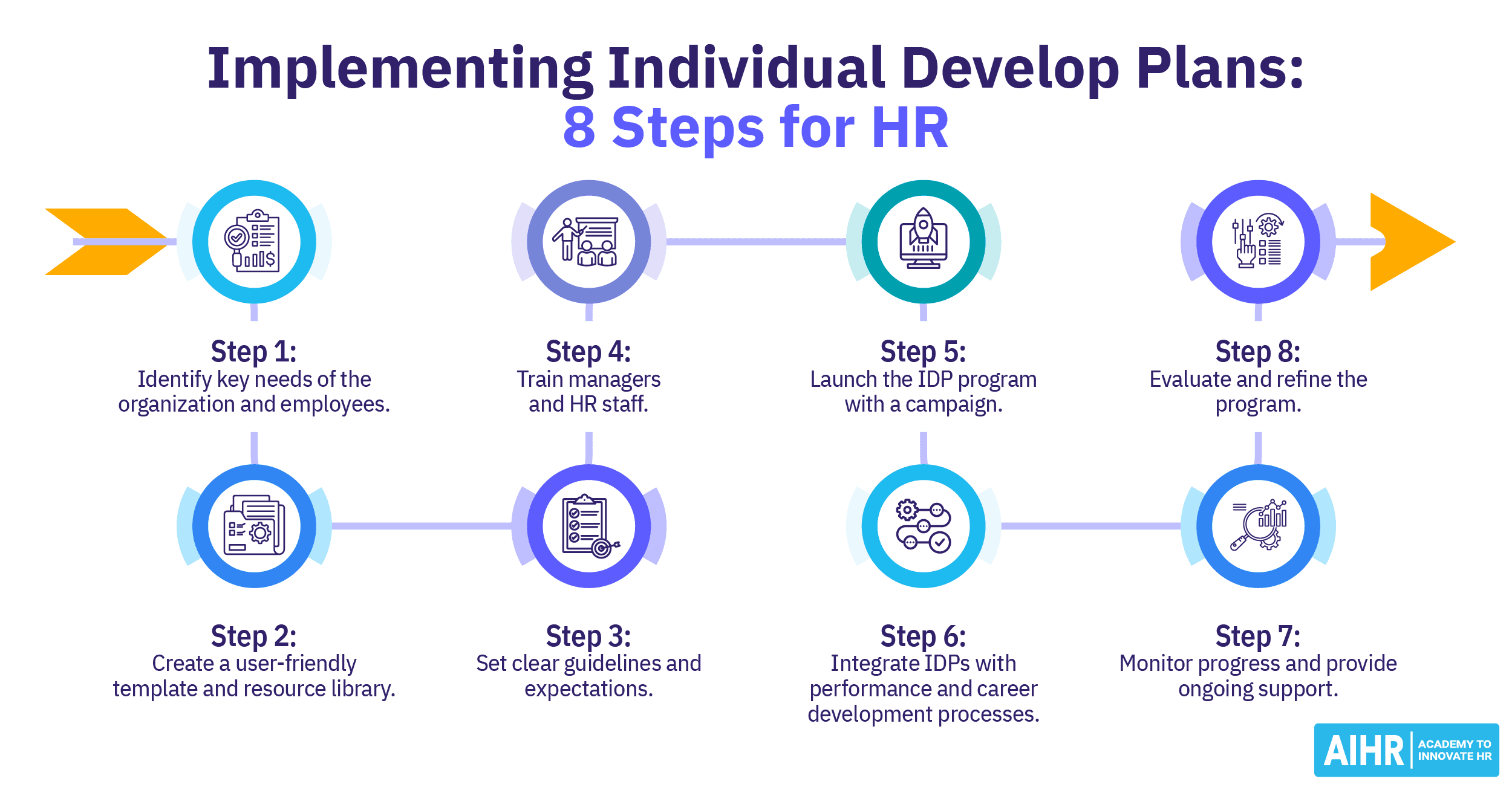
Creating an IDP is only the first step. For these plans to drive real impact, organizations need to embed them into their broader talent development culture. That means scheduling regular IDP review conversations, training managers to coach rather than just evaluate, and ensuring employees have access to the learning resources their plans require.
It also means treating IDPs as living documents. Goals shift, priorities change, and new opportunities emerge. The most effective IDPs are revisited at least quarterly and updated to reflect the employee's evolving situation.
Whether you're an HR professional building a development program from scratch or a manager looking to support a single team member, individual development plan examples like the ones above can give you a practical starting point. Pair them with a customizable IDP template and a consistent review process, and you'll have a powerful tool for growing talent — and keeping it.