
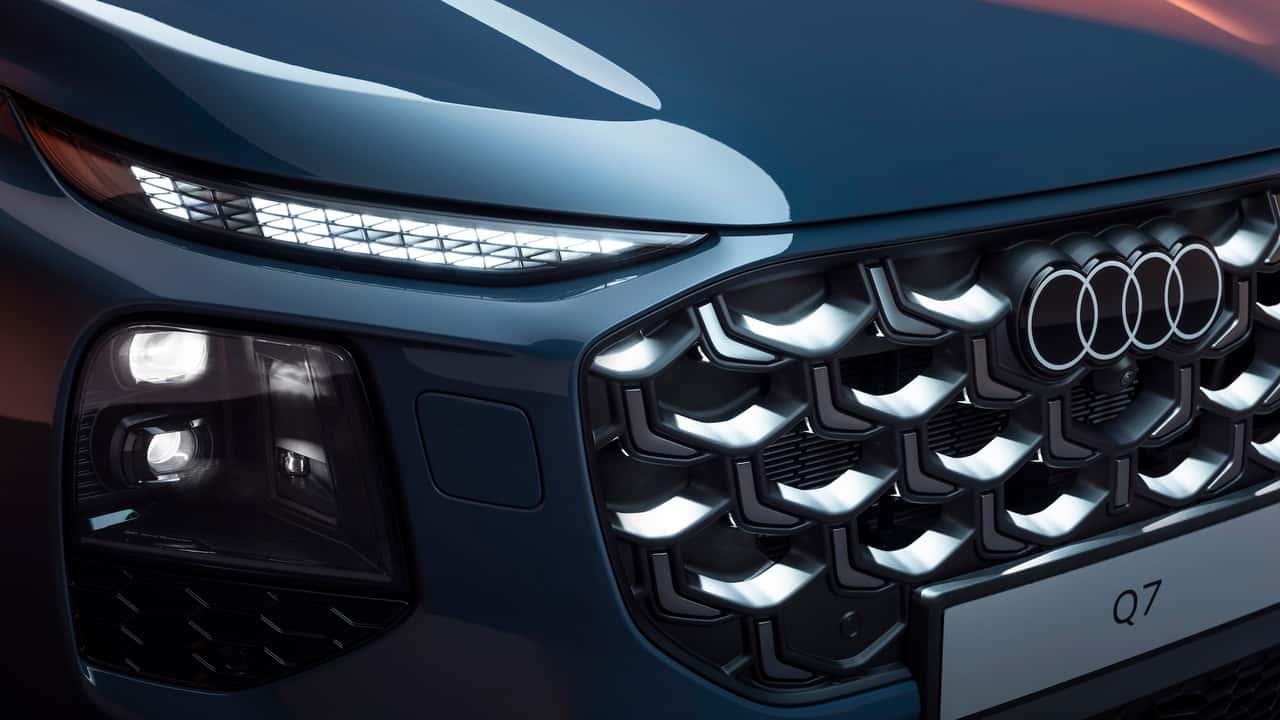
Audi's Refreshed Q7 Goes Diesel-Only in Europe — But There's a Logical Reason
When Audi pulled the wraps off its refreshed Q7 for European markets, one detail immediately caught the attention of automotive enthusiasts and potential buyers alike: the updated flagship SUV would launch exclusively with diesel powertrains. In a continent that has been gradually shifting toward electrification and increasingly scrutinizing combustion engines, the decision raised more than a few eyebrows. However, Audi has a perfectly rational explanation for the move — and the good news is that it won't stay that way for long.
Understanding the European Market Context
To appreciate Audi's strategy, it helps to understand the broader landscape of large SUV sales in Europe. Unlike the North American market, where V6 and V8 gasoline engines dominate full-size and near-full-size SUVs, European buyers have historically shown a strong preference for diesel powertrains in larger vehicles. The reasons are straightforward: diesel engines deliver the kind of low-end torque that makes towing and long-distance motorway cruising effortless, while also returning significantly better fuel economy compared to their petrol equivalents at highway speeds.
For a vehicle the size of the Q7 — a three-row, seven-seat luxury SUV — these characteristics matter enormously. European drivers routinely cover long distances across the continent, and the cost of fuel remains considerably higher than in markets like the United States. A diesel-powered Q7 simply makes more economic sense for the typical European buyer profile, at least for now.
Why the Updated Q7 Launched Diesel-First
Audi's decision to introduce the refreshed Q7 with only diesel engine options at launch is not an ideological statement — it is a pragmatic, market-driven approach rooted in production planning and regional demand forecasting. Automakers frequently stagger powertrain availability when rolling out updated models, prioritizing the configurations most likely to generate the highest volume of early sales in a given region.
In Europe, that means diesel. By concentrating initial production on the engine variants most in demand, Audi can streamline manufacturing, manage supply chain logistics more efficiently, and bring the updated model to showrooms faster. It is a strategy used across the industry, and it rarely signals a long-term commitment to a single powertrain philosophy.
Audi has been clear on this point: additional engine options will follow in the relatively near future. So while diesel dominates the order books today, buyers who are waiting for a petrol, plug-in hybrid, or other powertrain variant won't have to wait indefinitely.
What Other Engines Are Expected to Join the Lineup?
While Audi has not published a definitive timeline for every additional powertrain, the Q7's existing model history gives strong clues about what is coming. The previous-generation Q7 was available with a range of engines that included:
- Turbocharged petrol engines — including a 3.0-litre TFSI V6 unit offering a balance between performance and everyday usability.
- Plug-in hybrid (PHEV) variants — the Q7 TFSI e combined a petrol engine with an electric motor and a usable battery pack, giving buyers meaningful electric-only range for urban driving while retaining long-distance combustion capability.
- High-performance SQ7 and RSQ7 derivatives — for buyers seeking a more spirited driving experience from the large SUV platform.
It would be reasonable to expect each of these variants to make a return in some form with the refreshed model. The plug-in hybrid option is particularly significant given European regulations pushing automakers to reduce fleet-average CO2 emissions. A PHEV Q7 ticks multiple boxes: it gives buyers a path toward lower running costs and certain urban access benefits, while also helping Audi meet tightening emissions targets across its European lineup.
Diesel's Resilience in the European Premium Segment
Despite years of regulatory pressure following the 2015 Dieselgate scandal, diesel powertrains have proven remarkably resilient in the European premium and luxury SUV segment. Modern diesel engines are significantly cleaner than their predecessors, incorporating advanced exhaust after-treatment systems that bring NOx and particulate emissions well within current Euro 6 standards. For buyers prioritizing range, touring comfort, and real-world fuel efficiency, a well-engineered diesel remains a compelling choice.
Audi's TDI engine family has long been regarded as one of the benchmarks in diesel refinement, offering smooth power delivery, low noise levels at cruising speeds, and strong pulling power. In the context of a large, heavy SUV like the Q7, those qualities translate directly into a more relaxed and capable everyday driving experience.
What This Means for Prospective Q7 Buyers
If you are in the market for the updated Audi Q7 in Europe and diesel suits your needs, there has never been a better time to configure one. The refreshed model brings updated styling, revised interior technology, and the latest version of Audi's MMI infotainment system, all underpinned by the proven reliability of the TDI drivetrain.
If, on the other hand, you have your heart set on a petrol or plug-in hybrid version, patience will be rewarded. Audi has confirmed that the diesel-only launch phase is temporary, and that the broader engine portfolio is in the pipeline. Checking with your local Audi dealer or keeping an eye on official Audi announcements will give you the clearest picture of availability timelines in your specific market.
The Bigger Picture: Audi's Electrification Strategy
It is worth placing this launch strategy within Audi's wider electrification roadmap. The brand has committed to an increasingly electric future, with a growing portfolio of fully electric models under the e-tron and Q8 e-tron banners. However, Audi has also acknowledged that the transition will be gradual, and that internal combustion and hybrid powertrains will continue to serve important roles in its lineup throughout the remainder of this decade.
The Q7, as a flagship internal combustion SUV, occupies a specific and still commercially significant niche. Keeping it competitive and well-equipped with the right engines for each market is simply good business sense. The diesel-first European launch of the refreshed Q7 is not a retreat from progress — it is a measured, customer-focused decision that reflects where European demand actually sits right now, while leaving the door wide open for the full powertrain range to follow.