
The AI Arms Race Is Also a Stock Market Race
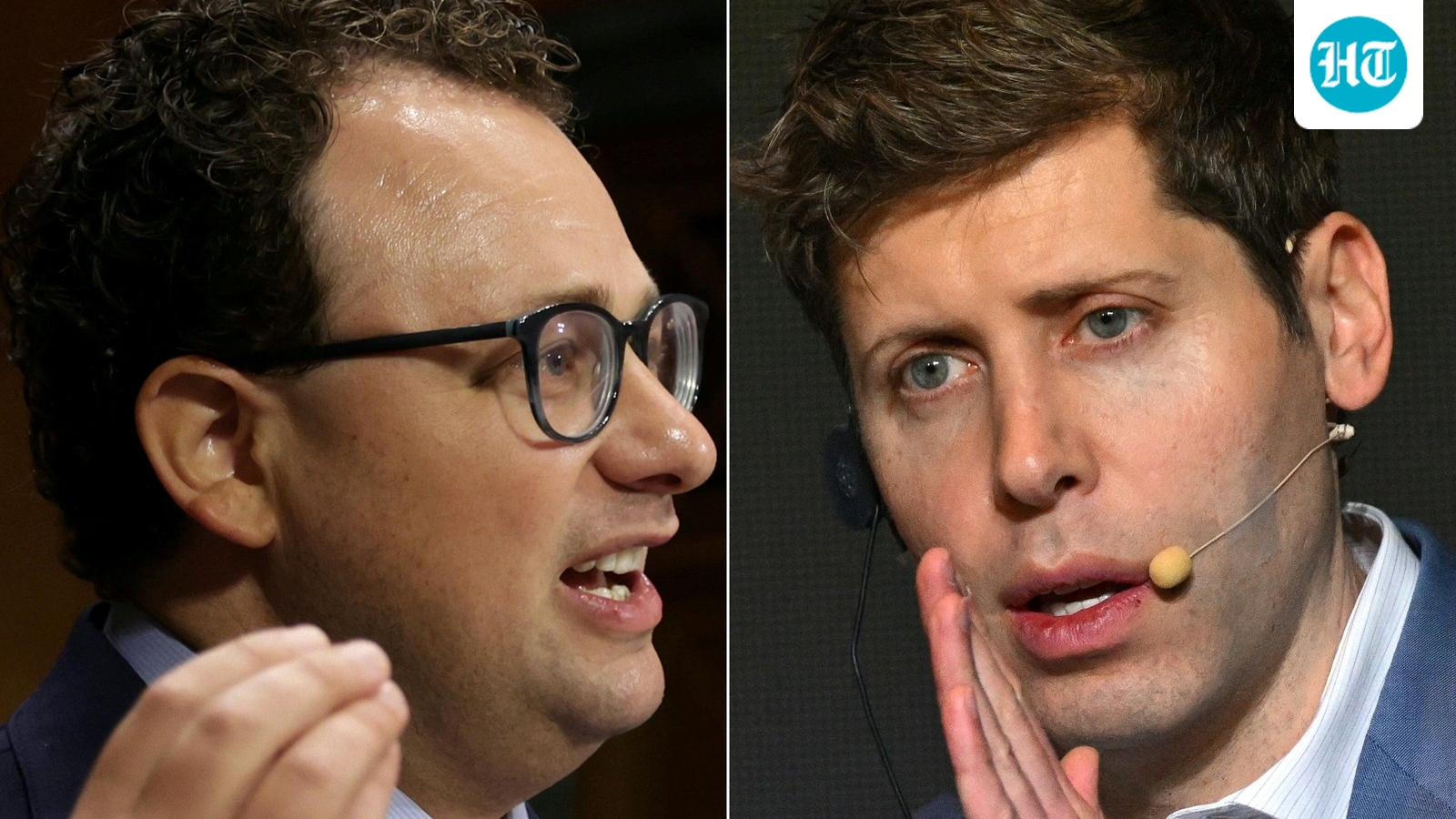
The artificial intelligence industry is no longer just a technology story — it is increasingly a financial one. According to research firm Gartner, global AI spending is projected to exceed $2.5 trillion in 2025 alone, with the largest portion flowing toward infrastructure. Data centers, specialized chips, cloud computing capacity, and energy systems are consuming capital at a pace the world has never seen. Against this backdrop, two companies dominate the conversation: OpenAI and Anthropic. Both are privately held. Both are valued in the tens of billions. And both are widely expected to pursue initial public offerings in the not-too-distant future. The question investors, analysts, and industry watchers are increasingly asking is: which one has the stronger hand going into that IPO?
The answer, perhaps surprisingly to some, may be Anthropic. Despite operating at a lower public profile than its more famous rival, Anthropic has quietly built a set of structural, strategic, and reputational advantages that could make it the more attractive offering when the time comes to ring the opening bell.
Understanding the Scale of AI Investment in 2025
To appreciate why an Anthropic IPO could outperform, it helps to understand just how extraordinary the current investment environment is. Gartner's estimate of $2.5 trillion in global AI spending is not simply a headline figure — it reflects a fundamental restructuring of how corporations, governments, and institutions allocate capital. The biggest share is going toward infrastructure, meaning the physical and digital backbone that makes AI possible: semiconductor fabrication, high-performance computing clusters, power generation, and networking.
This infrastructure wave creates enormous downstream demand for the software, models, and platforms that sit on top of it. Companies that can credibly claim a durable, defensible position in the AI model and platform layer are the ones investors will pay a premium to own. That is precisely where Anthropic sits — and where its differentiation from OpenAI begins to matter most.
Anthropic's Safety-First Brand Is a Business Asset
One of the most underappreciated aspects of Anthropic's market position is the commercial value of its safety-focused identity. Founded by former OpenAI researchers who believed the industry needed a more rigorous approach to building powerful AI systems, Anthropic has built its entire brand around responsible development. Its Claude model family is not just marketed as capable — it is marketed as trustworthy, interpretable, and aligned with enterprise risk requirements.
For institutional buyers, regulated industries, and government clients — precisely the segments with the largest budgets and the longest contract cycles — this framing is not merely nice to have. It is a procurement requirement. Healthcare systems, financial institutions, legal services firms, and defense agencies all face strict compliance obligations. An AI partner that leads with safety, publishes Constitutional AI research, and maintains transparent development practices is far easier to approve through a legal and procurement process than one with a more turbulent public reputation.
OpenAI, by contrast, has faced a series of high-profile governance crises, leadership controversies, and public disputes that have, fairly or not, raised questions among enterprise buyers about organizational stability. In an IPO context, institutional investors price reputational risk carefully. Anthropic's cleaner narrative is a tangible advantage.
Enterprise Traction and the AWS Partnership
Anthropic has secured partnerships that give it both revenue visibility and market reach that would be attractive to public market investors. Its relationship with Amazon Web Services, including a multi-billion-dollar investment and deep integration into AWS infrastructure, gives Anthropic distribution through one of the world's largest cloud platforms. Enterprises that already run workloads on AWS can access Claude models directly within their existing environments, dramatically lowering the barrier to adoption.
This kind of embedded distribution is exactly what public market investors look for when evaluating software and AI companies. It signals that revenue is not entirely dependent on direct sales efforts, that the product has cleared the vetting process of a major cloud hyperscaler, and that there is a clear path to scaling commercial relationships without proportional increases in sales costs. For a company approaching an IPO, that story is compelling.
The Governance Structure That Could Reassure Investors
Anthropic was structured from the outset as a public benefit corporation, with a long-term benefit trust holding a meaningful stake and a mission-driven mandate embedded in its legal architecture. While some investors might initially view this as a constraint on profit maximization, the more sophisticated read is that it provides a form of governance stability that reduces certain categories of risk.
The history of technology IPOs is littered with cases where post-IPO governance disputes, founder conflicts, or mission drift destroyed shareholder value. Anthropic's structure, by codifying its commitments legally rather than culturally, offers a different kind of durability. In an era when ESG considerations still influence large pools of institutional capital, and when AI governance is becoming a regulatory and political priority in multiple major markets, that structure can be positioned as a feature rather than a limitation.
What the $2.5 Trillion Tailwind Means for Valuations
When Gartner projects that global AI spending will exceed $2.5 trillion in 2025, with the biggest share going toward infrastructure, it is describing the rising tide that will lift multiple boats. But rising tides lift boats unequally depending on their design. Companies with strong enterprise relationships, differentiated technology, clean governance narratives, and embedded distribution partnerships are positioned to capture an outsized share of the software and services spending that will accompany the infrastructure build-out.
Anthropic checks those boxes more consistently than its primary rival does at this moment. That does not mean OpenAI will not have a successful IPO — it almost certainly will. But in a race where timing, narrative, institutional trust, and governance optics all matter, Anthropic has quietly assembled the stronger starting position.
The Bottom Line for Investors Watching the AI IPO Space
The AI IPO race is not won by whoever files first. It is won by whoever commands the most favorable valuation, attracts the most durable institutional capital, and builds the kind of post-IPO shareholder base that sustains long-term price appreciation. On each of those dimensions, Anthropic's safety brand, enterprise partnerships, governance structure, and position within a $2.5 trillion spending wave give it a meaningful edge. Investors paying close attention to the AI space would do well to watch Anthropic's moves carefully — because when it comes to the IPO starting line, being second in the news cycle does not mean being second in line for the prize.